
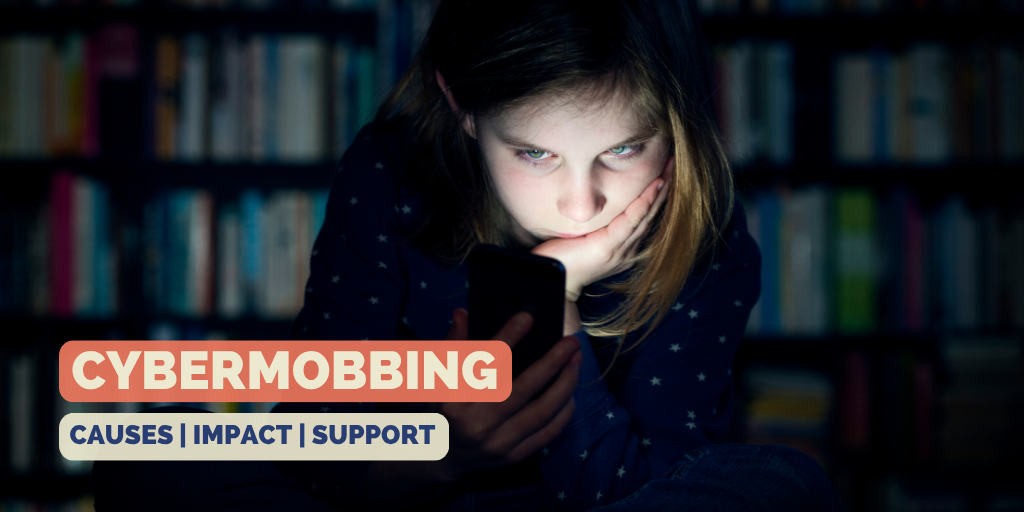
Cyberbullying: What you should know and how you can help
Cyberbullying is a form of psychological violence that takes place in the digital space and can basically affect anyone who is active online. Young people are particularly susceptible to cyberbullying as they spend a lot of time online, but adults and older people can also be affected by digital hostility.
In this article, you will find out exactly what cyberbullying is, how it differs from classic bullying, what forms it can take and what you can do if you are affected yourself or want to support others.
Contents:
What exactly is cyberbullying?
Cyberbullying refers to the repeated and targeted insulting, threatening, exposing or harassing of people via digital means of communication. It mainly takes place where we are online every day: on social media platforms such as Instagram, TikTok or X, via messenger services such as WhatsApp, in comment fields on YouTube videos or on gaming platforms, forums and even in emails.
Typical forms of cyberbullying include derogatory comments, the distribution of embarrassing or falsified images, the publication of personal information without consent (“doxing”), repeated harassment in direct messages, targeted exclusion from digital groups and even threats.
What is the difference between cyberbullying and classic bullying?
In contrast to traditional bullying, which usually takes place in specific locations such as school, the workplace or among friends, cyberbullying knows no boundaries in terms of time or space. It happens wherever people communicate with each other digitally. Anyone who is active online can potentially be affected – regardless of age or life situation.
Particularly stressful: the digital space offers hardly any opportunities for retreat. Hurtful content often spreads quickly and can be found for a long time. An embarrassing photo, a hateful comment or a humiliating message can reach hundreds of people within seconds.
Where does cyberbullying take place and why does it often go unnoticed?
Cyberbullying often happens where outsiders do not immediately see it: in private chat groups, direct messages or closed online communities. The attacks often remain undetected for a long time, especially if they take place subtly or build up over a longer period of time.
Many of those affected do not talk about what they have experienced out of shame or fear. This is why cyberbullying often remains invisible until serious consequences become apparent.
Who are the perpetrators of cyberbullying – and why do they often remain anonymous?
A central feature of cyberbullying is the anonymity of the perpetrators. They use fake profiles or pseudonyms to hide behind digital facades without being recognized. This lack of personal responsibility can lead to boundaries being crossed more quickly due to carelessness, peer pressure or deliberate intent.
It is particularly distressing for those affected not to know who is behind the attacks. This is also a legal problem: criminal prosecution is possible, but often difficult, for example if the perpetrators cannot be clearly identified or platforms are based abroad. In such cases, it becomes complicated for authorities to obtain the necessary personal information such as IP addresses or usage data in order to hold those responsible accountable.

What forms of cyberbullying are there?
Cyberbullying occurs in many different forms, often subtle, sometimes openly hurtful, but always with negative consequences for those affected. It ranges from derogatory comments to targeted public attacks.
- Hate speech: Insulting or hateful comments under posts, photos or videos on platforms such as Instagram, TikTok or YouTube are a particularly common form of hate speech. These so-called “hate comments” can specifically target a person’s appearance, origin, sexuality or opinions.
- Doxxing: This involves publishing personal information such as address, telephone number or school location – without consent. The aim is to expose the person concerned, put them under pressure or even put them in danger.
- Shitstorms: In some cases, when many people turn against a single person, sometimes in an organized manner, this is known as a shitstorm. The large number of negative comments can escalate quickly and create great psychological pressure. As a result, those affected often withdraw from social networks or delete their profiles altogether.
- Fake profiles: Fake profiles are often created to make fun of, imitate or discredit a particular person. This includes manipulated content, invented statements or sharing embarrassing pictures, all under a false name.
- Deepfakes: The dissemination of embarrassing screenshots, for example from private chats, or the use of deepfakes, in which photos or videos are technically manipulated to present someone in a false light, is just as problematic. It is often not clear to outsiders whether the content is real or fake.
- Digital exclusion: If someone is deliberately excluded from groups, ignored in group chats or deliberately ignored, this can have similar effects to classic forms of bullying – with the difference that it is often harder to notice in the digital space.

What are the causes of cyberbullying?
The reasons for cyberbullying are varied and often complex. However, there are some recurring patterns that explain why boundaries are quickly crossed, especially in the digital space.
Anonymity
A key factor is anonymity on the internet. People who can hide behind nicknames or fake profiles feel less responsible for their own behavior. Without direct eye contact and visible reactions from the person concerned, the inhibition threshold drops. Many people write things that they would never say in real life.
Social pressure
Social pressure and peer pressure also play a major role. In digital groups or class chats, it is often enough not to actively intervene to become part of the problem. Some people take part in bullying in order to fit in or to avoid being targeted themselves.
Lack of empathy in the digital space
There is also a lack of empathy. Digital communication is distanced, you can’t see facial expressions, hear the tone of voice or feel the other person’s discomfort. This makes it difficult for many people to empathize with the feelings of others. What was supposed to be “fun” can quickly turn bitterly serious.
Need for power
Some perpetrators also act out of a need for power or control. Belittling or publicly defaming others gives them a short-term feeling of superiority. On social media, this behavior is sometimes even rewarded with likes, shares or approving comments.
Lack of responsibility
And last but not least, there is often a lack of digital responsibility. Statements such as “I was only joking” or “I didn’t mean it like that” show how underestimated the impact of hurtful content is. Even a single comment can leave a deep mark, especially if it becomes part of a larger pattern.
Cyberbullying rarely comes out of nowhere. It grows insidiously with every mocking comment liked, every screenshot forwarded and every silent bystander.

Is cyberbullying a criminal offense?
In short: yes. Cyberbullying is not a separate criminal offense in Germany, but can be covered by various sections of the Criminal Code. Anyone who insults, threatens or exposes others online is not acting in a legal vacuum, even if it sometimes seems that way.
Depending on the type of attack, various laws may apply, including
- § Section 185 StGB (insult) – if someone is degraded by words or images
- § Section 186 StGB (defamation of character) – if false, defamatory allegations are spread
- § Section 187 StGB (defamation) – if lies are knowingly spread
- § Section 241 StGB (threat) – in the event of threats of violence or the like
- § Section 201a StGB (violation of the highly personal sphere of life through image recordings) – for example when distributing intimate photos
Young people can also be prosecuted if they take part in cyberbullying. Platforms such as Instagram, TikTok and WhatsApp offer reporting and blocking functions that should be used in an emergency.
What are the consequences of cyberbullying?
What begins online does not end at the screen, but has a deep impact on the everyday life, psyche and self-esteem of those affected.
Many people who experience cyberbullying develop anxiety over time, suffer from sleep disorders or slip into depression. The constant fear of the next comment, the next exposure or the next “laugh at the expense of” often accompanies them around the clock.
How does cyberbullying affect the psyche?
This is often followed by withdrawal from social life. Those affected isolate themselves because they no longer feel safe anywhere, either online or offline. The feeling of being alone and not being understood can cause profound loneliness.
This is compounded by self-doubt, which shatters their self-image. Some people lose faith in themselves as a result of bullying, and in severe cases this can even lead to self-harm or suicidal thoughts.
Trust in the digital world in which we operate on a daily basis is also being lost. Platforms that are supposed to connect us become places of threat. This often leads to drastic steps such as dropping out of school or training or withdrawing from professional life.
Cyberbullying therefore not only leaves its mark online, but can also have a profound and long-term impact on the mental health of those affected.

What can you do about cyberbullying?
Cyberbullying can be overwhelming, but no one is helpless against it. Both victims and witnesses have opportunities to do something. The important thing is to look, act and get support.
What can you do if you are affected?
If you yourself become the target of cyberbullying, try to stay calm and get help. Document all incidents by saving screenshots or chat histories. This evidence can be very important in the event of an emergency, such as a report or complaint.
Block the attackers and report the content on the respective platform. Many social media services now offer good tools for reporting offensive behavior or activating filters for certain terms.
Don’t be afraid to talk about what you have experienced. Confide in people you are close to, friends, family or colleagues. Counseling centers or online services also offer safe spaces and professional help. Talking alone can take some of the burden off your shoulders.
What can you do if you become a witness?
Cyberbullying often takes place in secret. This makes it all the more important for someone to look – and not click away. If you notice that someone is being insulted, ostracized or exposed online, you can take action.
Speak directly to the person concerned, signal support and offer help. Even a short message like “I saw what happened, you’re not alone” can go a long way.
Report the offensive content to get it off the internet. If you feel safe, you can also take a public stance: make comments in favor of respectful coexistence and contradict hateful statements.
Last but not least: Reflect on your own behavior. Sometimes cyberbullying starts with a supposedly harmless joke or a thoughtless like. By being mindful when dealing with digital content, you can contribute to a more respectful internet.
Help & advice
If you are feeling mentally stressed or have thoughts of self-harm or suicide:
There are people who are there for you and can support you.
📞 Telefonseelsorge: 0800 111 0 111 or 0800 111 0 222
🌐International help: www.telefonseelsorge.de/internationale-hilfe/
💬Further assistance:
U25 Deutschland – Online Consulting by e-mail for people under 25
Nummer gegen Kummer – children and youth telephone: 116 111
Nummer gegen Kummer – parents telephone: 0800 111 0 550
Take action against cyberbullying via vostel.de
Combating cyberbullying is not a task for individuals, it needs a strong community that takes a stand. If you want to get involved, there are many ways to contribute.
On vostel.de you will find a selection of projects and organizations that work to combat (cyber)bullying. Whether in prevention work at schools, in supporting those affected or in campaigns for more digital civil courage.
We wish you every success in your fight against cyberbullying and online hate!






No Comments yet!