
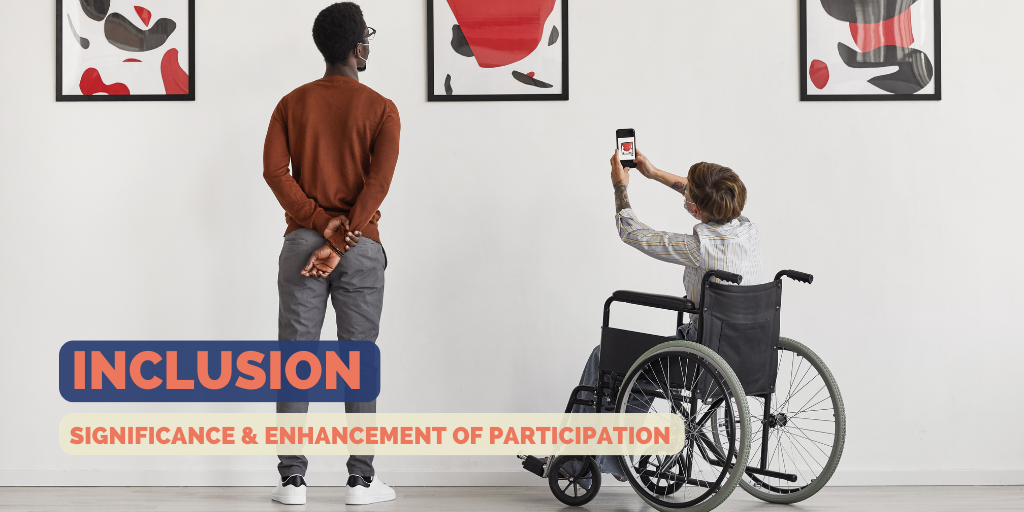
Inclusion: What it means and how you can increase participation
Inclusion is an essential component of a just society and yet many people experience barriers that restrict their participation on a daily basis: from a lack of accessibility in buildings and digital services to a lack of comprehensibility of information and social prejudices. The consequences of a lack of inclusion range from limited educational and career opportunities to social isolation.
In this article, you will find out why inclusion is so important for a just society, what obstacles still need to be overcome and how each and every one of us can contribute to creating more participation for everyone – e.g. by getting involved via vostel.de.
Contents:
1. What does inclusion mean?
Inclusion means that all people, regardless of their individual abilities, background, gender, age or need for assistance, can participate in social life on an equal footing. To achieve this, barriers must be removed, structures adapted and framework conditions created that take individual differences into account and enable everyone to participate and feel comfortable in education, work, politics and everyday life.
How does inclusion differ from integration and belonging?
In addition to inclusion, terms such as integration and belonging are also used when it comes to social participation. This is how they differ:
- Integration means that people are accepted into an existing system, but on condition that they adapt to the existing structures and rules. The system itself hardly changes at all. Participation is possible, but is often associated with hurdles because individual needs are only taken into account to a limited extent.
- Inclusion goes one step further by designing structures in such a way that all people can participate on an equal footing. In contrast to integration, it is not the person who adapts to the existing system, but rather the system is changed in such a way that it takes into account the diversity of all needs.
- Belonging describes the personal feeling of really belonging. It is the emotional result of successful inclusion: people feel accepted, respected and valued regardless of their personal characteristics.
Which people are affected by the topic of inclusion?
Even though inclusion is usually associated with people with disabilities, it also applies to people with a history of migration, different social and economic backgrounds, diverse age groups and genders, as well as people of different sexual orientation, identity, religion or language. Basically, the idea of inclusion is to include everyone who (potentially) experiences discrimination, disadvantage and social exclusion.
2. In which areas of life does inclusion play a role?
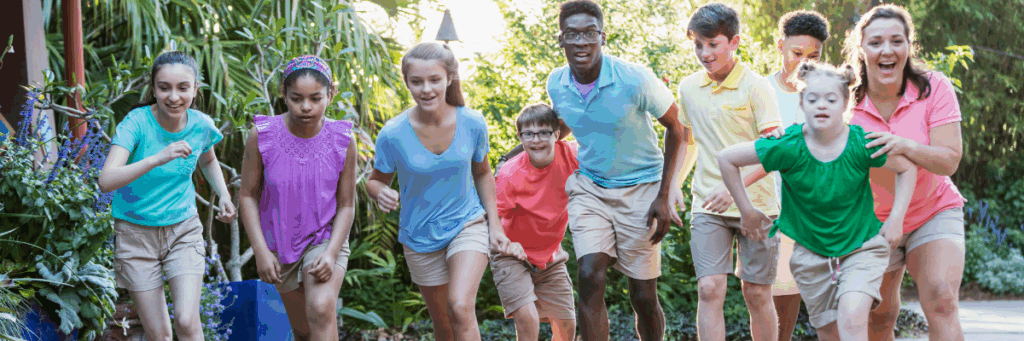
Inclusion can be relevant in all areas of life, from home, school and work to leisure, health and the digital space.
Inclusive living
Inclusive living means that people with and without disabilities and with different social, cultural or age-related backgrounds live together on an equal footing, with self-determination and without barriers. This includes structural aspects such as wheelchair-accessible entrances, wide doors or elevators, but also social structures that promote community: e.g. neighborhood meetings, joint leisure activities or support services in everyday life. Such forms of living not only strengthen the independence of residents, but also promote mutual understanding and social networking.
Inclusion in education
Inclusive education means that children and young people learn together regardless of disability, social or economic background, origin, gender or learning level. The aim is to create equal opportunities for education and avoid exclusion. Schools with an inclusive concept rely on individual learning plans, multi-professional teams of teachers and special needs teachers and a barrier-free learning environment. Examples include inclusive comprehensive schools, where pupils with different educational goals are taught together up to year 10, or mainstream schools with targeted inclusion programs that are supported by additional remedial lessons and assistance.
According to data from the Bertelsmann Foundation, around 581,000 pupils in Germany had special educational needs in the 2022/23 school year. Of these, 44.4% were taught inclusively in mainstream schools, while 55.6% attended special schools. In relation to all students, the exclusion rate was 4.2% in 2022/23 – meaning that around one in every 25 children in Germany does not learn alongside their peers in a mainstream school, but in a special school. Fifteen years ago, this figure was 4.8%, which shows that progress has been made, but there is still room for improvement.
Inclusion in working life
An inclusive labor market gives all people, regardless of disability, origin, gender, age, sexual identity or social background, the same opportunities for employment and career advancement. For people with disabilities, barrier-free workplaces, flexible working hours, technical aids and job coaches are key prerequisites. For other marginalized groups, targeted measures are often necessary, e.g. anonymized application procedures, language support or mentoring programmes. Employers benefit from a diverse workforce that brings different perspectives, experiences and skills to the table.
In practice, however, there are still significant hurdles to overcome on the path to a more inclusive working life: according to data from the Federal Statistical Office, around 7.9 million people with severe disabilities were living in Germany at the end of 2023 – just under 9% of the population. Their employment rate in 2023 was 61.9%, well below the average of 82.8%, and their unemployment rate was 11%, almost twice as high as the average. In addition, only 39% of companies that are legally obliged to do so employ people with disabilities, as stipulated in the “Act to Promote an Inclusive Labor Market”; one in four companies prefers to pay a compensatory levy.
Inclusion in everyday life
Inclusion in everyday life is evident in all areas in which people encounter each other: in public spaces, on public transport, at events, in leisure activities, in the healthcare sector or online. It becomes concrete when, for example, train stations are accessible without steps, events offer sign language interpretation, websites are designed to be barrier-free or admission prices are socially staggered. For people who are structurally disadvantaged in everyday life, for example due to a disability, chronic illness, poverty or lack of language skills, such measures determine whether social participation is possible.
You can also find out more about the areas of life relevant to inclusion at Lebenshilfe e.V.
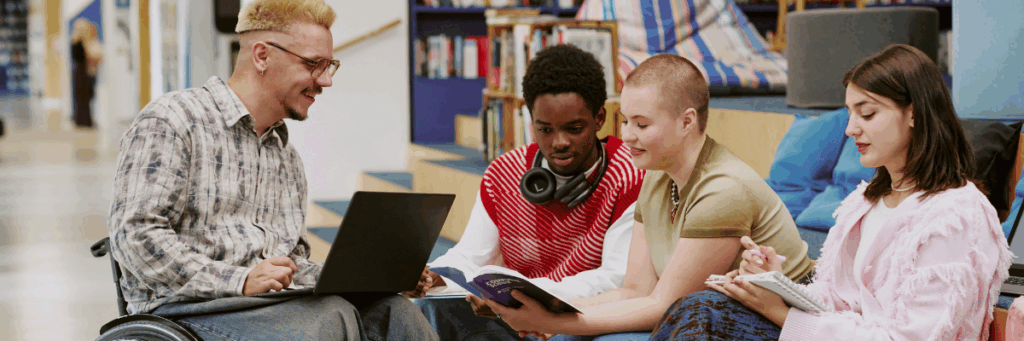
3. Why is a lack of inclusion a problem?
For those affected, a lack of inclusion means being excluded from social life, whether in education, the labor market or in public spaces. Anyone who repeatedly encounters barriers due to a disability, origin, language, social situation or identity not only loses opportunities, but often also the confidence to be heard and seen as part of a community. This can lead to psychosocial stress such as loneliness, low self-esteem or depression.
Negative consequences, including for society and the economy
Socially, a lack of inclusion weakens cohesion and promotes an “us versus them” mentality. If entire groups feel that they have no role to play in the community, their willingness to participate in shaping society decreases, with consequences for democracy and social stability.
A lack of inclusion is also economically problematic: if people are unable to develop their potential, not only are individual development opportunities lost, but also valuable resources for society as a whole, for example in the form of skilled workers, innovation and diversity of perspectives. For example, the exclusion of women, mothers, people with disabilities and LGBTQ+ people from the world of work and from management positions has enormous costs for the global economy (see this article from the World Economic Forum).
Inclusion is therefore a key prerequisite for fair, stable and sustainable coexistence on many levels.
Typical barriers – what makes inclusion difficult in everyday life
Barriers that exclude people can look very different, from structural obstacles and a lack of digital accessibility to problems of understanding and social prejudices. Here are a few examples:
Physical barriers
A lack of ramps or elevators, doors and passageways that are too narrow or inadequately designed guide rails make it difficult for people with limited mobility or visual impairments to access buildings and public places.
Digital barriers
Websites without screen reader support, insufficient color contrasts or complicated navigation make it difficult for people with visual impairments or cognitive limitations to use digital services. Language barriers are also an obstacle, for example for people who do not speak German well, as well as for senior citizens or people with cognitive impairments who cannot easily grasp complex information.
Communication barriers
Even outside of digital spaces, information is often not accessible without barriers. Whether at public events, in the media or in public authorities, the lack of sign language interpreters, content without subtitles or without easily understandable language puts people with hearing and speech impairments at a particular disadvantage. As a result, they are often denied equal access to socially relevant information.
Social barriers
Prejudice, discrimination and a lack of awareness lead to people being excluded or stigmatized, which makes their acceptance as equal members of society and thus their participation much more difficult.

4. What legal regulations are there for more inclusion?
Inclusion is legally enshrined as a social goal in Germany and internationally. Several laws and international agreements oblige states and societies to remove barriers and enable equal participation. These include
General Equal Treatment Act (AGG)
The General Equal Treatment Act protects people from discrimination on the grounds of disability, but also on the grounds of age, gender, origin, religion, sexual identity or chronic illness. It applies in numerous areas of life, from the world of work and everyday transactions to finding accommodation, and is intended to ensure equal opportunities for all.
UN Convention on the Rights of the Child
The UN Convention on the Rights of the Child obliges the signatory states to respect the rights of all children regardless of their origin, gender, disability or other characteristics and to provide targeted support for children with disabilities in particular. The goal is a self-determined, dignified life and active participation in community life.
Basic Law
Since 1994, Article 3 (3) of the German Basic Law has stated: “No one shall be disadvantaged because of their disability.” This sentence applies to all areas of life and forms the foundation for anti-discrimination and inclusion of people with disabilities.
UN Convention on the Rights of Persons with Disabilities (UN CRPD)
Germany adopted the UN Convention on the Rights of Persons with Disabilities in 2009. signed and recognized. It makes it clear that participation is a human right. States parties are obliged to remove barriers and create inclusive structures in areas such as education, work, health, politics and leisure.
Federal Participation Act (BTHG)
The Federal Participation Act strengthens the self-determination of people with disabilities and improves their financial and social participation opportunities, for example higher allowances for income and assets for recipients of integration assistance. It was introduced gradually until 2023.
5. What can each of us do for more inclusion?
For inclusion to succeed, we not only need laws, barrier-free buildings and comprehensible information, but also an attitude that sees diversity as an enrichment and structures that give everyone as many equal opportunities as possible. Politicians, institutions, companies, civil society and each and every one of us bear responsibility in our everyday lives, for example by questioning prejudices, treating people with respect and actively creating situations in which no one is excluded.
This can mean…
- Include sign language interpretation at events
- activate subtitles in online meetings
- Provide additional information in plain language
- or among friends to ensure that people with reduced mobility are also invited.
- Even small gestures, such as making room on the bus, offering help with transfers or drawing attention to missing ramps, help to make inclusion part of everyday life.
6. Support projects for more inclusion now via vostel.de
If you would also like to get involved in more inclusion in society, then take a look at vostel.de. Here you will find a large selection of projects from social organizations that are committed to inclusion and that you can support directly with your commitment.
From promoting inclusive educational work and designing accessible online services to supporting people with disabilities on excursions and in everyday life. Find your suitable project for more inclusion now.
We wish you every success in your work for more inclusion!


No Comments yet!