
Volunteering for zero waste: what you can expect
Several hundred kilograms of household waste are produced per capita in Germany. Many items are only used for a short time, bought new and disposed of quickly, which has a particularly negative impact on the environment and climate. Volunteering in the area of zero waste counteracts this and promotes conscious changes in consumption in order to avoid waste, use products for longer and reduce environmental impact.
In this article, you will find out what role zero waste plays in waste prevention, how organizations and volunteers implement this approach in practice and how you can get involved in this area yourself.
Contents:
1. Waste and resource consumption in Germany
High quantities of waste in everyday life
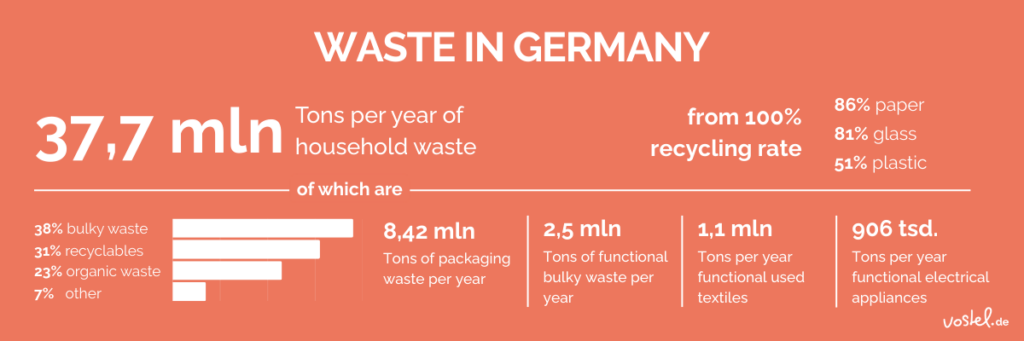
Enormous amounts of waste are generated in Germany every year. According to the latest provisional data from the Federal Statistical Office, around 37.7 million tons of household waste were collected in 2024. This corresponds to around 452 kilograms per person, around 11 kilograms more than in the previous year. Germany continues to be one of the countries with a very high volume of waste per capita, with a recent upward trend. (Source: Statistisches Bundesamt).
According to the Federal Environment Agency (UBA), this waste is made up of different types of waste. These include above all
- 38 % Household and bulky waste
- 31 % Recyclable materials
- (18% cardboard and carton)
- (7% glass)
- (6% plastics and lightweight packaging)
- 23 % Biowaste
- 7 % Other waste, such as hazardous materials or small electrical appliances
A large proportion is generated in private households and is closely linked to consumer habits and the use of disposable products.
Packaging waste and recycling rates
Packaging accounts for a large proportion of the waste generated in Germany. According to the Umweltbundesamt, the amount of packaging generated by private end consumers in 2023 was around 8.42 million tons. Although a significant proportion of this is recycled, recycling rates vary greatly depending on the material. They indicate what proportion of the collected packaging is actually recycled:
- Paper, cardboard and paperboard: recycling rate of around 86 percent
- Glass: recycling rate of around 81 percent
- Plastics: recycling rate of around 52 percent
Throwing away instead of reusing
A significant proportion of waste is generated by products that are replaced even though they could still be used. This mainly includes bulky everyday items that are disposed of as bulky waste. In Germany, around 2.5 million tons of bulky waste were recently generated each year, a large proportion of which consists of furniture that could in principle be reused or repaired (source: Statistisches Bundesamt).
Textiles also make a significant contribution to waste generation. According to industry figures, around 1.01 million tons of used textiles are collected separately in Germany every year, which corresponds to more than 15 kilograms per person, and the trend is rising (source: BMUKN), in addition to electrical appliances, which are accepted by primary treatment plants and, according to the Statistischem Bundesamt, will amount to around 906,000 tons in 2023 . Some of these appliances could have remained in use for longer if they had been repaired.
2. how organizations and volunteers get involved for zero waste
What non-profit organizations do
Non-profit organizations and initiatives play a central role in promoting zero waste in society. They carry out educational work, develop educational programs and implement specific projects to support waste prevention in everyday life.
One important nationwide contact point is Zero Waste Deutschland e.V., which networks local initiatives, provides information material and campaigns politically for waste prevention. Environmental associations such as the German Nature and Biodiversity Conservation Union (NABU) also address the issue of waste prevention, for example in connection with resources, species and water protection.
In addition, various associations such as Ozeankind and RhineCleanup organize regular local cleanup campaigns to collect waste from the natural environment. Social department stores, Oxfam stores and second-hand stores promote the passing on of clothing, furniture and household items. Actors such as AfB gGmbH and platforms such as wohindamit.org are also active in the field of reuse.
How volunteers are involved
Many of these organizations are dependent on support. Volunteers get involved in very different ways depending on the project, for example in the preparation and implementation of campaigns, supporting repair or second-hand projects or accompanying educational and informational offers. Organizational tasks or public relations work in the association can also be part of a volunteer position in the area of zero waste.
You don’t necessarily need specialist knowledge, but an interest in helping to shape projects, support processes and promote zero waste in everyday life. Getting started is usually straightforward. Volunteers often receive guidance and can flexibly adapt their tasks to their time and abilities.
Typical fields of voluntary work for zero waste
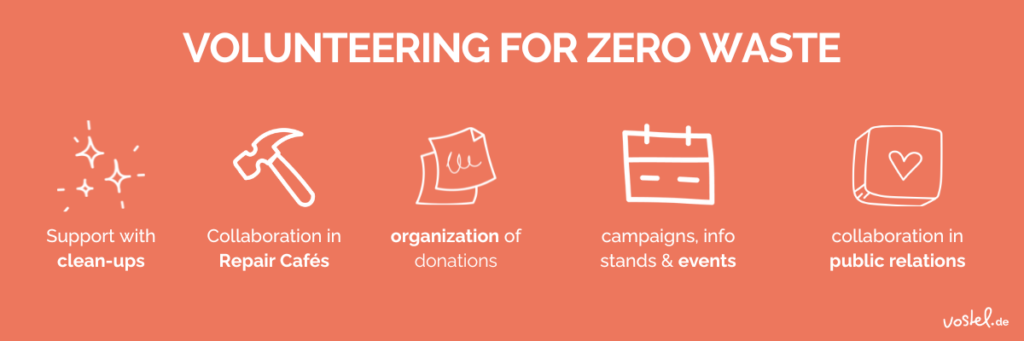
Volunteers can get involved in Zero Waste in a variety of ways, for example:
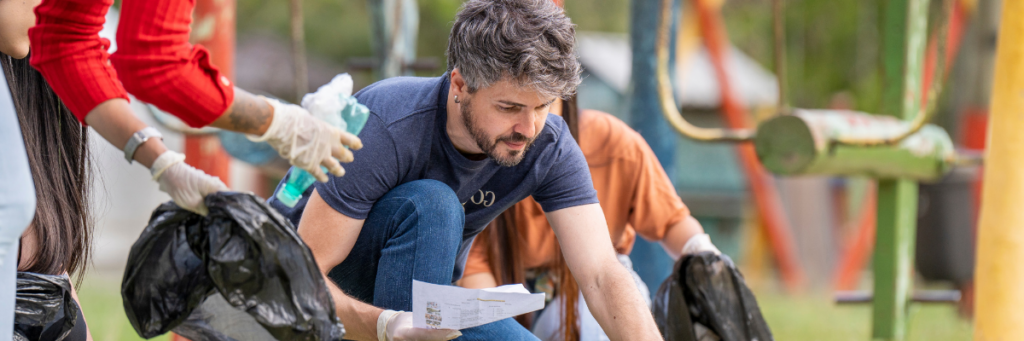
- Support for clean-ups in public spaces, such as parks or riverbanks, often combined with discussions about waste prevention
- Participate in repair cafés, swap meets or upcycling projects to make things usable for longer
- Help with information stands, workshops or action days where knowledge about zero waste, recycling and sustainable consumption is imparted
- Organization and preparation of events, for example coordination, procurement of materials or supervision of participants
- Support in public relations, for example through social media, newsletters or the creation of information materials
- Assignment in the organization and communication of food distributions and clothing donations, in the acceptance of donations, sorting or coordination in the warehouse
3. what you should look out for when volunteering for zero waste

Learning and helping to shape
You don’t have to be an expert to volunteer in the zero-waste sector. Many organizations impart knowledge directly through volunteering. They explain the background to waste prevention and show concrete ways to take action. The decisive factor is a willingness to learn, take responsibility and develop new perspectives on consumption and resources.
Time commitment and flexibility
Many zero waste projects have a flexible structure. There are one-off campaigns such as clean-ups or action days, but also regular activities in repair cafés or educational projects. Think in advance about how much time you want to invest and choose a commitment that fits in well with your everyday life.
Communication on equal terms
In the zero waste commitment, you often come into contact with people who think very differently about consumption, waste or sustainability. An open, respectful approach is important. Instead of working with bans or assigning blame, many initiatives focus on exchange, motivation and ideas that are suitable for everyday use.
Reflect on your own motivation
Volunteering in the zero waste sector can be very fulfilling, but does not always show visible results immediately. Changes take time, especially when it comes to consumer habits. This makes it all the more important to keep reminding yourself of your own motivation and to see success even in small moments. Every conversation, every action and every disposable decision that is avoided helps to reduce waste and pass on sustainable alternatives.
4. find your volunteer position for zero waste on vostel.de
If you are interested in volunteering in the area of zero waste, we can help you find a suitable commitment on vostel.de. From one-off activities such as clean-ups to regular assignments in repair cafés, educational projects or local initiatives, you will find a wide selection here.
FAQ – Frequently asked questions about volunteering for zero waste
Do I need prior knowledge to get involved in zero waste?
No. No special prior knowledge is required for most zero waste volunteer positions. Many organizations explain the background, processes and tasks involved in the commitment. What is most important is an interest in the topic and a willingness to learn new things.
How much time should I plan for volunteering for zero waste?
It depends on the project. There are one-off campaigns such as clean-ups or action days that only last a few hours, as well as regular commitments in repair cafés or educational projects. You can decide for yourself how much time you want to invest.
Do I have to live completely zero waste myself?
No. Nobody expects you to live a perfectly sustainable life. It’s about developing solutions together and initiating changes in which as many people as possible can participate. A genuine interest in the topic, the willingness to invest time and to incorporate small changes into your everyday life step by step are valuable.
Is volunteering in zero waste more practical or organizational?
Both are possible. Some commitments are very practical, such as clean-ups or repair projects. Others focus on organization, public relations or education. You can search for the right format on vostel.de.
Discover more articles from our series #VolunteeringExplained
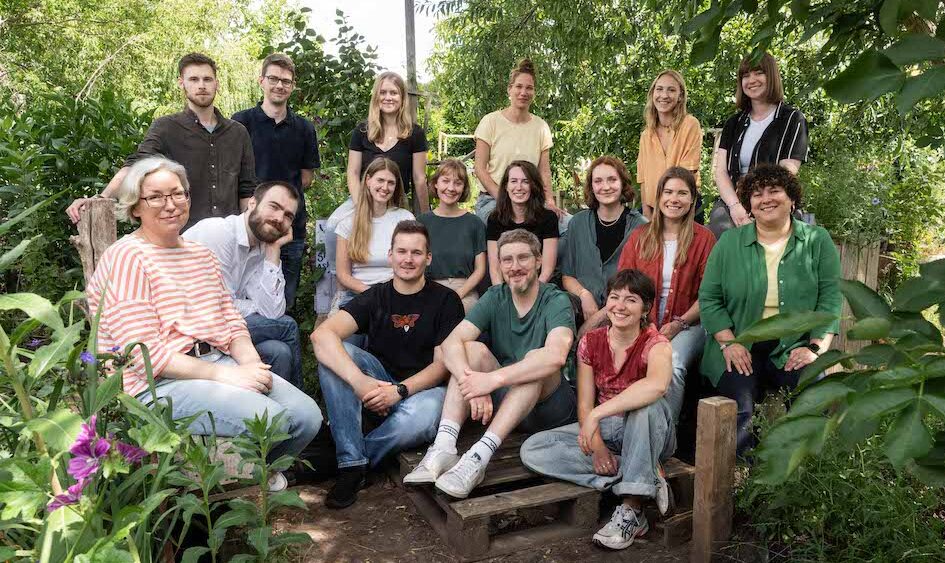
Your vostel.de team wishes you lots of fun with your voluntary work for Zero Waste!

No Comments yet!