
Volunteering with seniors: What you can expect
In an ageing society, support for older people is becoming increasingly important. In addition to large organizations, numerous non-profit organizations and volunteers are also involved in providing visiting services, leisure activities and digital support.
In this article, we give you an insight into the life situation of senior citizens in Germany and show you how you can bring them real joy with your commitment and what you can expect.
Contents:
- The situation of senior citizens in Germany
- How organizations & volunteers support senior citizens
- What you should look out for when volunteering with senior citizens
- Find your volunteer position with senior citizens on vostel.de
- FAQ – Frequently asked questions about volunteering with senior citizens
1. The situation of senior citizens in Germany
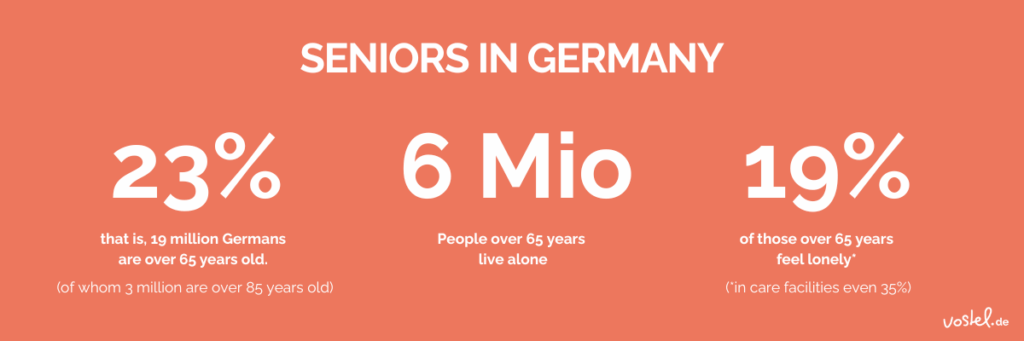
Around 19 million people in Germany are now aged 65 or over (in 1991 it was just under 12 million), which corresponds to around 23% of the population. The group of very old people, i.e. people over the age of 85, is growing in particular. There are currently around 3 million of them living in Germany (see Destatis statistics on senior citizens in Germany 2024).
Social structures are changing
Social structures are also changing in parallel with this development. Around 6 million senior citizens live alone today. For many people, children and grandchildren often live far away, meaning that family support is less common in the immediate vicinity. Neighborhood networks have also become less stable in many places. Where family ties or regular contact are lacking, other forms of support and encounters are needed.
Loneliness becomes a challenge
Living alone does not automatically mean loneliness, but the risk is increasing. Around 19% of people aged 65 and over feel lonely. In care facilities, the proportion is even higher at around 35%
In order for senior citizens to suffer less from loneliness and participate more in social life, support from organizations, local services and committed volunteers is needed in many places.
2. How organizations & volunteers support senior citizens
What non-profit organizations do
In Germany, many different players are involved in the care and support of older people – from municipal institutions and church organizations to aid organizations. Many of them run their own care and senior citizens’ facilities, offer outpatient care services or organize care services for senior citizens who continue to live at home.
The major associations include Caritas, Diakonie, DRK, AWO, Johanniter and Malteser. The
How volunteers are involved
Volunteers bring time, attention and variety to the everyday lives of older people without taking on care tasks. For example, they regularly visit senior citizens at home or in institutions, accompany them on walks, listen, play together or help with small errands. Some also provide support with digital education, such as using a smartphone or tablet.
To ensure that they are well prepared for their work, volunteers usually receive instruction and tips for their meetings with senior citizens. For longer-term commitments, for example in care facilities, organizations also offer training or accompanying meetings. There are always fixed contact persons who can be approached with questions or uncertainties.
Typical fields of voluntary work with senior citizens
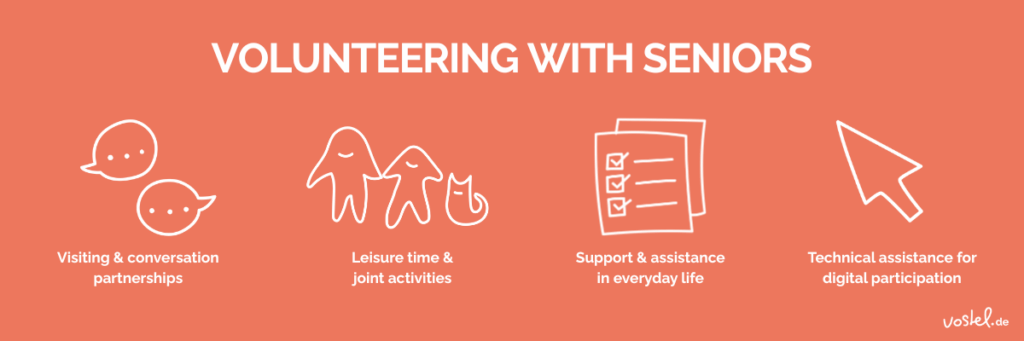
Engagement with senior citizens is diverse – and offers a suitable opportunity for almost every interest. On vostel.de you will find numerous such engagements, for example:
- Visiting services & conversation partnerships: regular visits, listening, joint discussions
- Leisure time & joint activities: walks, games, handicrafts or cooking together
- Support in everyday life: accompaniment to the doctor, help with shopping or visits to the authorities
- Technical assistance for digital participation: Support with the use of smartphones, tablets or video calls
3. What to look out for when volunteering with seniors

Reliability and openness are the most important things
Volunteering with senior citizens thrives on trust and continuity. Many older people look forward to regular encounters and build up a personal relationship over time. That is why it is important to keep your promises.
Openness is just as important, because every encounter is different. Some senior citizens like to talk about their lives, others are reserved at first. Patience, empathy and genuine interest help to build trust.
Find the right form of volunteering for you
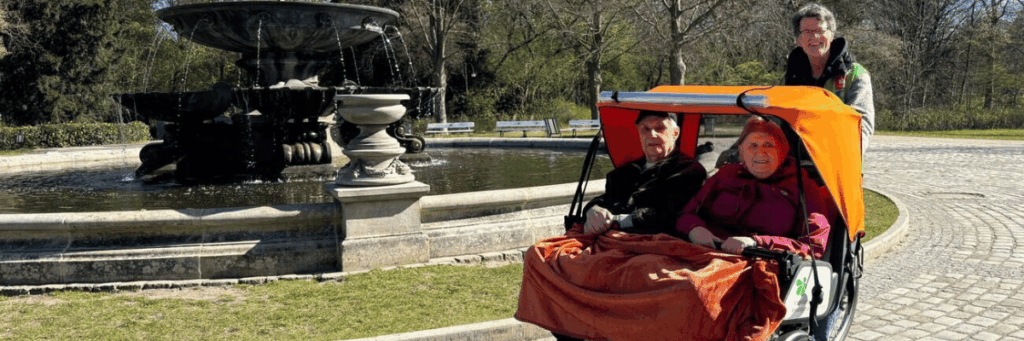
Not all volunteering with senior citizens is the same. While visiting sponsorships usually take place on a regular basis, there are also activities such as play afternoons, joint walks or rickshaw rides that you can accompany on a one-off or flexible basis.
So you can think about it in advance:
- How much time would you like to contribute?
- What kind of encounter do you find exciting?
- How regularly or spontaneously would you like to be active?
Many organizations offer short interviews or briefings in advance. This gives you a good feel for the task and what suits you.
Know your own limits
Volunteers provide valuable support, but are no substitute for professional care. If you notice that someone needs more support than you can provide, you should contact the people in charge of the organization.
Engaging with senior citizens can also be emotionally challenging. For example, when topics such as illness, death or loss come up. Many organizations offer discussion groups or contact persons to reflect on such experiences together.
Why engaging with senior citizens is worthwhile
Many volunteers report that they find their commitment enriching. Especially deep conversations, shared experiences and the feeling of doing something meaningful are perceived as valuable. For senior citizens, spending time together means enjoying life and social participation. In the best case scenario, the time spent together enriches both sides.
4. find your volunteer activity with senior citizens on vostel.de
If you would like to get involved with senior citizens, you will find numerous opportunities on vostel.de: from regular visiting sponsorships to one-off activities such as walks, games afternoons or digital support. Find the commitment that suits you now.
FAQ – Frequently asked questions about volunteering with senior citizens
What requirements do I need to fulfil to volunteer with senior citizens?
No special qualifications are required. What is important is empathy, reliability and enjoyment of contact with people. However, you will usually receive more detailed information in advance from the responsible organizations.
How much time should I plan for a commitment?
It depends on the type of commitment:
- Visiting services usually take place regularly (e.g. once a week).
- Activities such as play afternoons or walks can also be one-off or flexible.
- Many organizations also offer the opportunity for trial and introductory appointments.
What can I do if I am unsure whether a commitment is right for me?
An initial meeting or taster session helps you to get a feel for whether a particular volunteer position suits you. You can also talk to a coordinator about your questions before you start.
What tasks do volunteers take on and what tasks do they not take on?
Volunteers provide support in everyday life, keep people company or help with leisure activities. They do not take on any nursing or medical tasks.
Can I also get involved in the topic of ‘digital technology’ for senior citizens?
Yes, many senior citizens are happy to receive support in using smartphones, tablets or video calls. Digital sponsorships or explanatory lessons are now widespread.
I’m rather shy, can I still get involved?
Absolutely! Many activities start on a small scale, e.g. accompanied walks or craft sessions. So you don’t have to be extroverted, what’s important is genuine interest and empathy.
Your vostel.de team wishes you lots of fun in volunteering with seniors!




No Comments yet!