

Attract & retain young volunteers: A practical guide for non-profits
Inspiring young people to volunteer and retaining them in the long term is a challenge for many organizations. Changing life realities, tight time budgets and digital communication habits require new approaches in volunteer management.
Young volunteers bring valuable perspectives, digital skills and fresh ideas with them. If you understand their motivation, clearly formulate volunteering opportunities and use the right channels, you can address them in a targeted manner and retain them in the organization in the long term. We show you how to do this in this article.
This is how you should proceed:
- 1. Understand the target group
- 2. Attract volunteers: channels & approach
- 3. Retain volunteers in the long term
- 4. Find volunteers with vostel.de
The most important facts at a glance
- Entry mostly via short-term commitment, but often willingness for more
- The main motivation is to help shape society and solve problems
- Clear, activating invitations to tender are decisive for the motivation to get started
- Digital channels play the central role in acquisition
- Appreciation and reliable communication strengthen long-term loyalty
1. Understand the target group
Who are the young volunteers?

Young volunteers are not a homogeneous group. Their expectations, experiences and opportunities vary considerably depending on their background and stage of life.
The target group includes, among others:
- Pupils who would like to gain their first experience in voluntary work
- Trainees who get involved alongside their training
- Students looking for practical experience and meaningful projects
- Career starters who want to do something meaningful alongside their job, but whose time budget is often limited
- People between two phases of life who are looking for a meaningful activity for the transition period.
- Newcomers and expats who have come to Germany as refugees, au pairs, international students or to work and are looking to make connections here and contribute to society.
The latter group in particular is often neglected, although it makes up a not insignificant proportion of committed young people. On vostel.de, for example, they make up more than 50% of those registered.
Commitment initially mostly one-off or short-term
Regardless of what stage of life they are in, many initially get involved on a project-related or temporary basis. However, this does not mean that they are not interested in longer-term commitments. Our vostel volunteer survey with 1,000 participants even shows a clear tendency towards long-term commitment if the conditions are right.
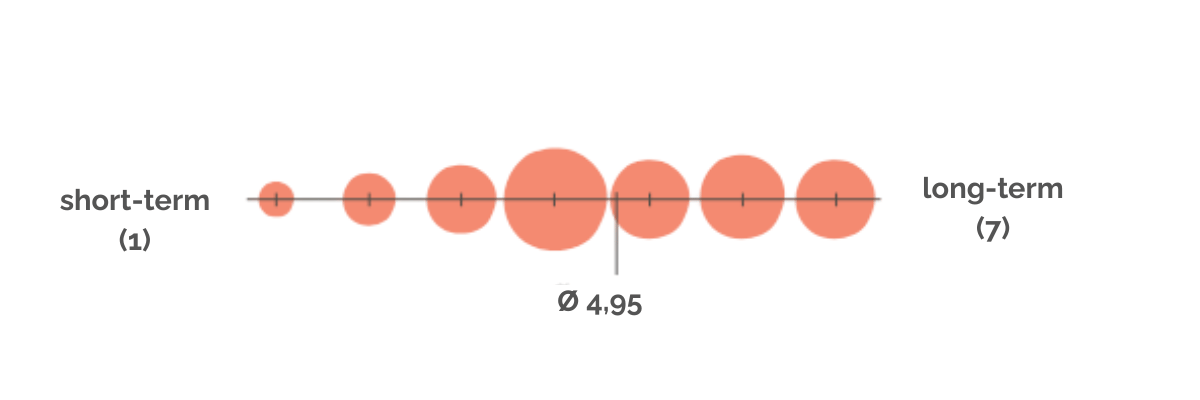
It is crucial to have the opportunity to get to know the organization and the work before making a longer-term decision. We therefore recommend that organizations initially offer low-threshold “entry-level projects” that are limited in time and provide an initial insight.
What motivates young people to get involved?
By far the most common motivation is the desire to actively help shape society and contribute to solving social or societal problems. Over 60% of respondents in our survey cited this as the main reason for their involvement.
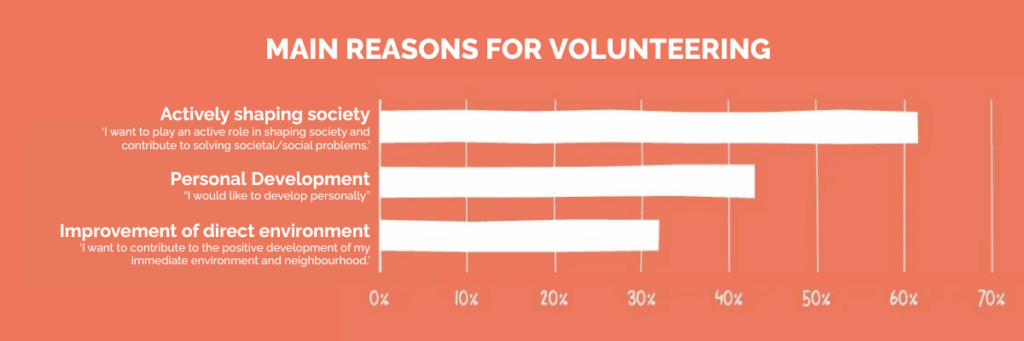
When looking for a volunteer position, young volunteers therefore pay particular attention to what vision an organization pursues, what contribution it makes to society and how the work of volunteers actually contributes to this. A clear, authentic vision is therefore a decisive factor in recruitment.
Two examples of clear visions:
Start with a Friend e.V. formulates its vision as follows:
“Our vision is a society that embraces its diversity. Everyone feels comfortable and has an equal say in shaping it. To achieve this, we create personal encounters between people with and without a history of immigration.”
#BIKEYGEES e.V. makes the social benefits immediately clear:
“Every woman in the world should be able to ride a bike. And should be allowed to! Our training courses create immediately visible and sustainable changes in the lives of the participants.”
In addition to meaning and impact, other motivators also play an important role according to our survey:
- Co-determination in the type and scope of the own commitment
- Acquisition of new skills and personal development
- Exchange with other volunteers
You can use these motivations to target young volunteers and get them excited about volunteering with you. We’ll tell you exactly how in the next section.
2. Attract volunteers: channels & approach

Where young volunteers can be reached
Young people mainly obtain information about volunteering opportunities digitally. The following channels have proven to be particularly important:
Your own Website
It serves as a central point of contact for anyone who already has an idea for the organization or topic they want to get involved in. It should therefore be easy to find via search engines (keyword SEO) and present your volunteering opportunities in an appealing and clear way, ideally with a separate subpage for volunteering, including contact options.
Volunteering Platforms
Platforms such as vostel.de or Aktion Mensch make it possible to make your volunteering opportunities visible without your own website and with little effort. Here you can reach people who are actively looking for volunteering opportunities. The advantage: These platforms are already SEO-optimized and have a large pool of people willing to volunteer.
Social Media
Instagram and TikTok play an important role, as young people use them not only for entertainment, but also to find out about socially relevant topics. Here, organizations can provide insights into their work, allow volunteers to have their say or present low-threshold commitment. However, the time required should not be underestimated. A well-maintained social media channel requires regular support, interaction and time for content creation.
Personal Recommendations
Satisfied volunteers are important multipliers and often recommend volunteering to friends and family.
Before you decide on your channels, you should clarify:
- Who do we want to reach? Which channels make sense for this?
- What resources are available to us?
- What content can we actually implement on a regular basis?
Not every organization can and must be present on all channels. It is better to focus on the channels that you can use your resources on a permanent basis and that are most important for your target group. You should then plan enough time for this.
How to create appealing volunteering opportunities

A volunteering opportunity – whether on your own website or a volunteering platform – is often the first point of contact with an organization, similar to a job advertisement, only for a volunteer position. It should therefore be clear, realistic and motivating. Here are a few tips:
Arouse interest with the right title
The title determines the first impression and whether the project is shortlisted. The combination of activity and context, e.g:
- “Help prepare meals in an emergency shelter for homeless people”
- “Supervise children with their homework at the neighborhood center”
- “Get involved in the social media team for an environmental initiative”
This wording makes it softly clear what the commitment is about and who benefits from it.
Formulate in a direct and activating way
As in the examples, the approach should be direct and activating. Phrases such as “You support us in …” or “Together we ensure that …” work better than abstract mission statements or formal language. Address potential volunteers directly instead of writing in the third person.
Pay attention to sensitive language
Terms such as “people with a refugee background” or “people with disabilities” instead of “refugees” or “disabled people” signal a reflective approach. Gender-equitable language is also becoming increasingly important for young volunteers.
What a good tender should contain
A good volunteering opportunity answers all the important questions clearly and specifically:
- What is it about? What is the goal of the organization and the volunteering position?
- What exactly happens? What specific tasks are there for volunteers?
- When and where? What are the time, place and time required for the activity?
- What are the requirements? Are there any skills or requirements that are needed?
- What do you offer? Do you reimburse travel costs or pay an expense allowance? (not a must)
- What are the next steps? Use an inviting closing formula and ideally describe how the rest of the process will proceed.
Avoid technical terms and internal abbreviations in your job description, as it should also be understandable for outsiders and inexperienced volunteers. The more specific your wording is, the better interested parties will be able to assess whether the commitment suits them and the more suitable the requests you receive will be.
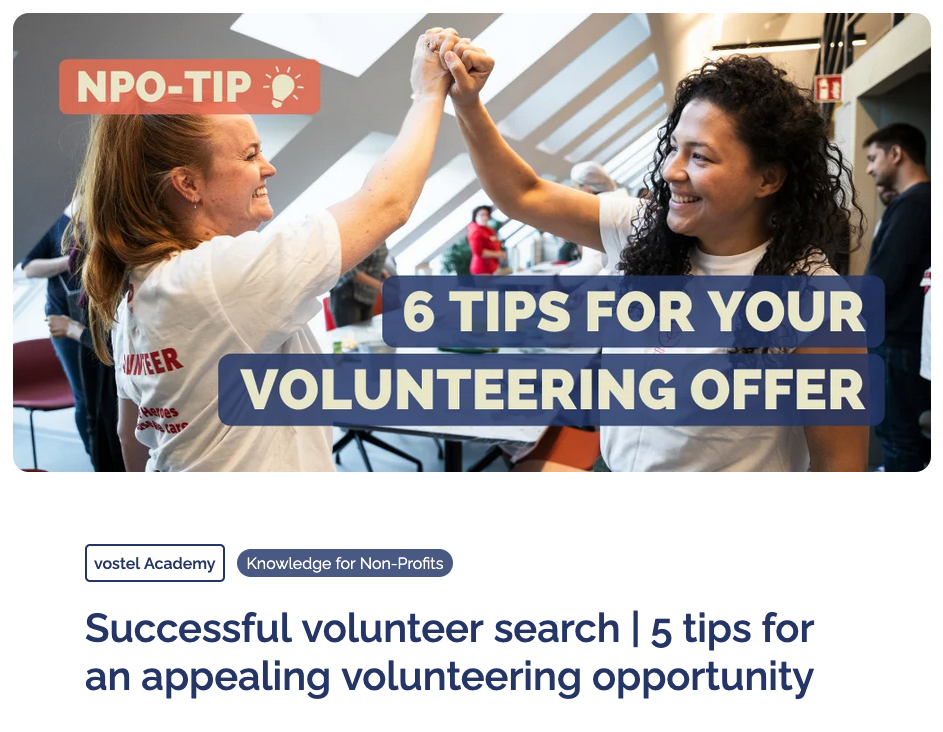
You can find even more tips for your volunteer advertisement in our blog post on successful volunteer searches.
3. Retain volunteers in the long term
Retention of young volunteers is achieved primarily through reliable structures, regular communication and visible appreciation. In the following, we show what is important in the various phases of volunteering.
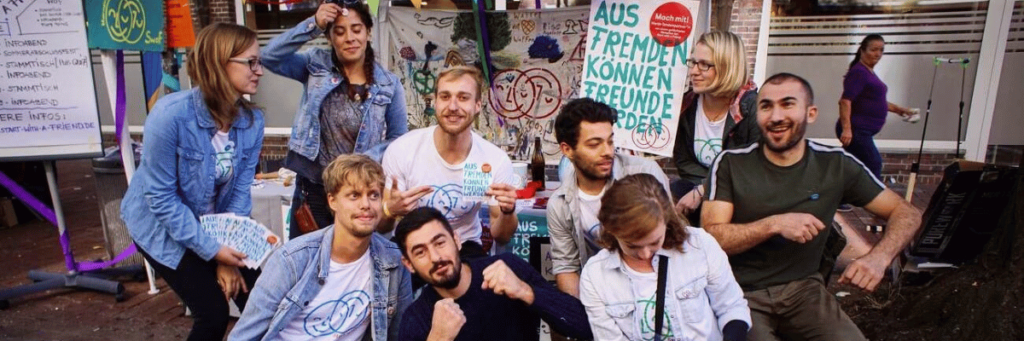
A good start to volunteering
A structured introduction makes it easier for young volunteers to find their way around. In addition, a brief introduction to the organization, clear responsibilities and accessible contact persons create a sense of security. A good start has a positive effect on the entire collaboration and increases the likelihood that volunteers will stay.
Support and communication
Regular communication is key to building loyalty. Young volunteers want to know how their commitment is working and receive quick feedback if they have any questions. This has proven its worth:
- Short feedback sessions
- Regular updates on the impact of the work
- Open discussions in the event of changes or problems
Appreciation during volunteering
Appreciation is one of the most important factors for long-term commitment. In our volunteer survey, three forms emerged as particularly important:
1. Personal praise and appreciation
For around half of those surveyed, this is the most important form of recognition. While praise is linked to specific achievements, appreciation refers to general respect for the person. Both must be actively communicated, through kind words, personal Christmas cards, small gifts for birthdays or even an invitation to a team outing.
2. Certificates of commitment
Many young volunteers use their commitment for applications or scholarships. Fortunately, this form of recognition is relatively easy to implement – simply create a template that you can customize.
3. Further education offers
Further training is closely linked to one of the main reasons for volunteering: personal development. You can offer them to volunteers either internally (e.g. workshops on your topics) or by referring them to external (free) offers.
There are digital platforms with free courses especially for non-profits and their volunteers:
- betterplace Academy – Courses on fundraising, project management and communication
- Haus des Stiftens – Knowledge about non-profit management
- D3 – how digital works – digital skills for non-profit organizations
The mere mention of such offers shows appreciation and supports volunteers in their development.
Find the right form of recognition for you
There is no secret recipe for recognition, but it’s all in the mix. A small survey of your volunteers can provide you with valuable information, and the very act of conducting it has an appreciative effect, as volunteers are asked for their opinion.
Consciously ending the commitment
As commitment is often linked to life phases, the end of the collaboration should be consciously designed. A personal thank you, a brief review of the work done together or a certificate of completion help to end the contact on a positive note.
This way, your organization will be remembered fondly and young volunteers will be more likely to return later or recommend the volunteering to others.
4. Find volunteers with vostel.de
Do you now have a good idea of who the young volunteers are and what makes them tick? Then you can start looking for volunteers right away and register your organization on our vostel.de platform with just a few clicks and post projects online for which you are looking for support. We will be happy to support you personally with questions about registration and creating appealing applications.
We wish you every success in your search for volunteers!





No Comments yet!